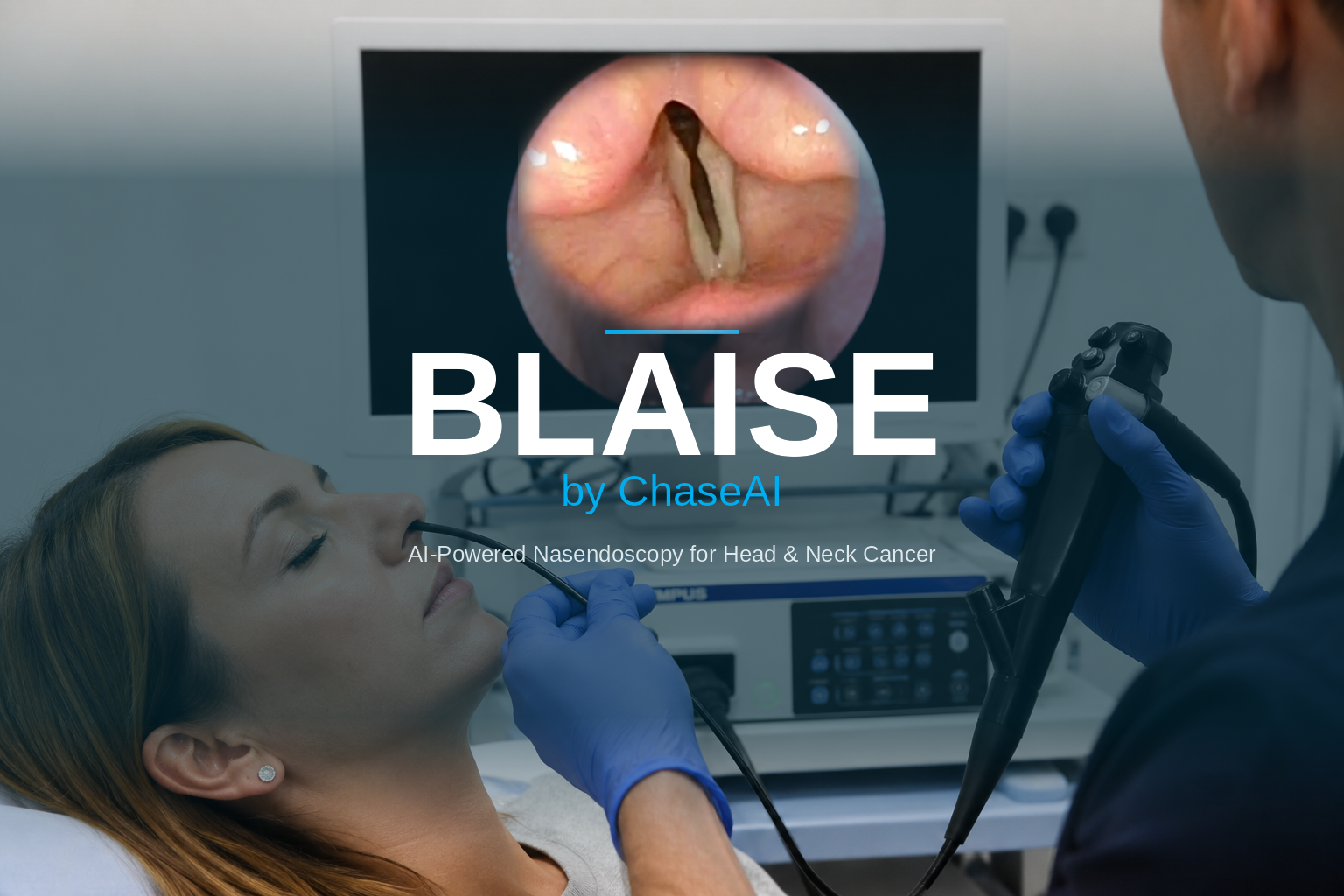

Head and Neck Cancer (HNC) is currently diagnosed through Flexible Nasendoscopy (FNE) — a procedure that involves a clinician examining the nasal passage, throat and voice box with a camera. Its accuracy depends heavily on individual clinician experience, which can lead to inconsistent diagnoses.
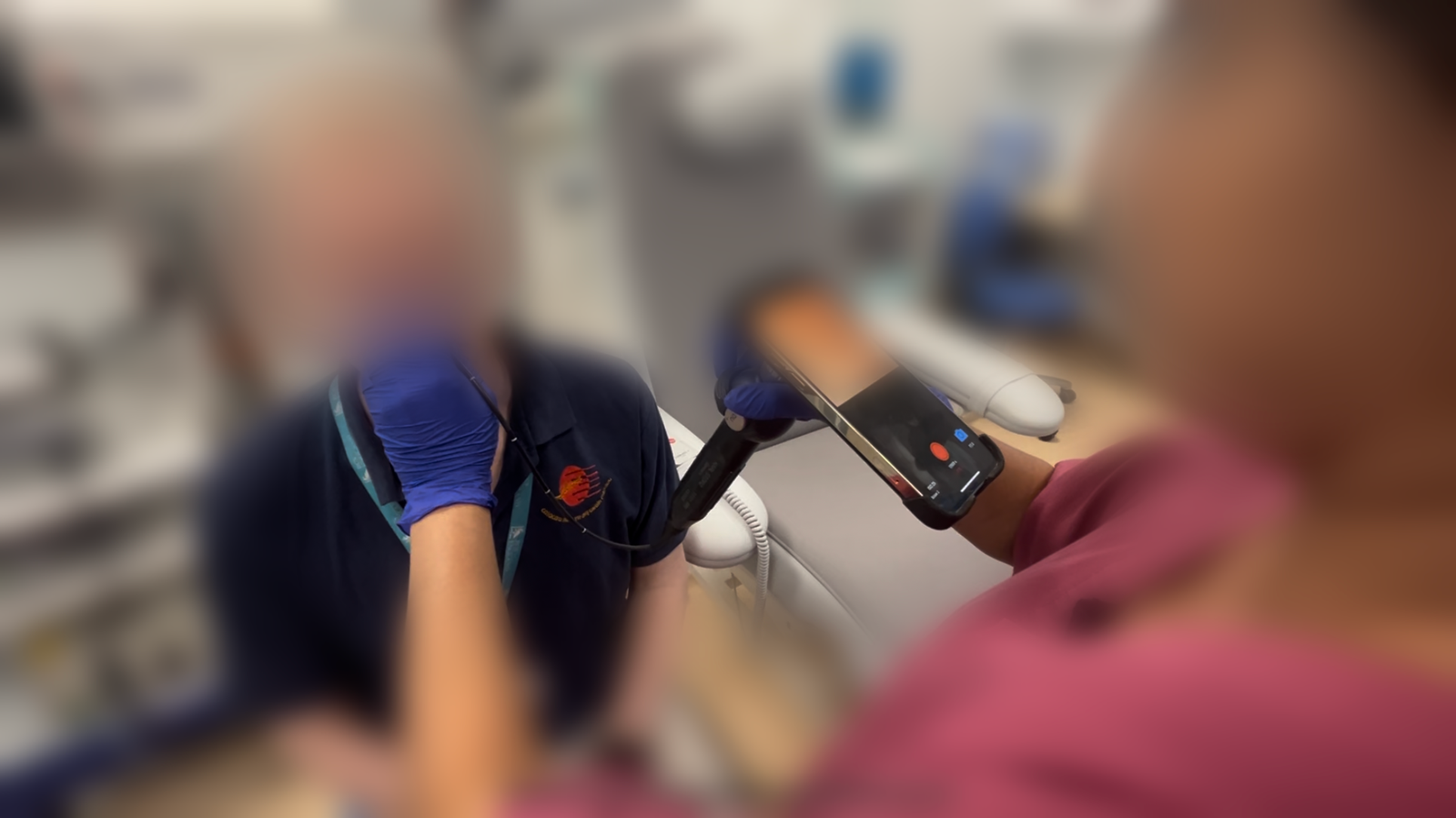
Blaise is the world's first multi-site, AI-powered nasendoscopy platform for Head and Neck Cancer. It integrates seamlessly with the endoscopy equipment clinicians already use, requiring minimal additional training.
During the procedure, Blaise records video and captures images, applying proprietary cancer-detection algorithms in real time to assist the clinician's assessment, before generating a detailed report and storing it securely in the cloud alongside the patient's record — reviewable remotely at any time.
In pre-clinical validation across 7,382 images from 2,092 patients, Blaise outperformed senior clinicians, achieving 95% sensitivity in detecting cancer and 91% specificity in correctly ruling it out. Blaise is fully compliant with ISO 13485, NHS DTAC, the DSP Toolkit, GDPR and IMDRF requirements.
ChaseAI's founding team brings together clinical leadership, regulatory expertise and software engineering, united by a shared goal: advancing Head and Neck Cancer diagnosis through clinical and academic leadership.
Click on the tabs below the team profiles to see further insights into each member.

Dr Soudeh Chegini — Founder. NHS Consultant Head and Neck Cancer Surgeon and UKRI Future Leaders Fellow, with a PhD in Biomedical Engineering. Soudeh created Blaise's AI and provides ChaseAI's clinical and academic leadership.
Senior software consultant with 12+ years experience building client relationships and helping large organisations realise their capability needs, alongside a strong UI/software-development background.
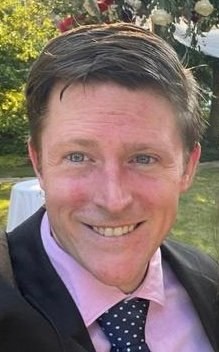
API and back-end developer and Chief Technology Officer, with 17+ years experience building scalable technical solutions for clients. Responsible for Blaise's connectivity and web interface.

Our Clinical Advisory Board and Partners bring together cancer clinicians, a clinical nurse specialist, charity representatives and patient advisors — contributing clinical research, ethics expertise and co-authored publications to guide Blaise's development.





ChaseAI is aiming for Medical Device Class IIa certification, unlocking access to the UK market and onboarding our first 3 partner NHS Trusts, completing Year 1-2 of our Roadmap to Commercialisation.
ChaseAI is also aiming to register the software as a 'breakthrough medical device', also recognised by the FDA.
Blaise was pre-clinically validated on 7,382 images from 2,092 patients, giving it the evidence base to outperform senior clinicians on sensitivity and specificity.
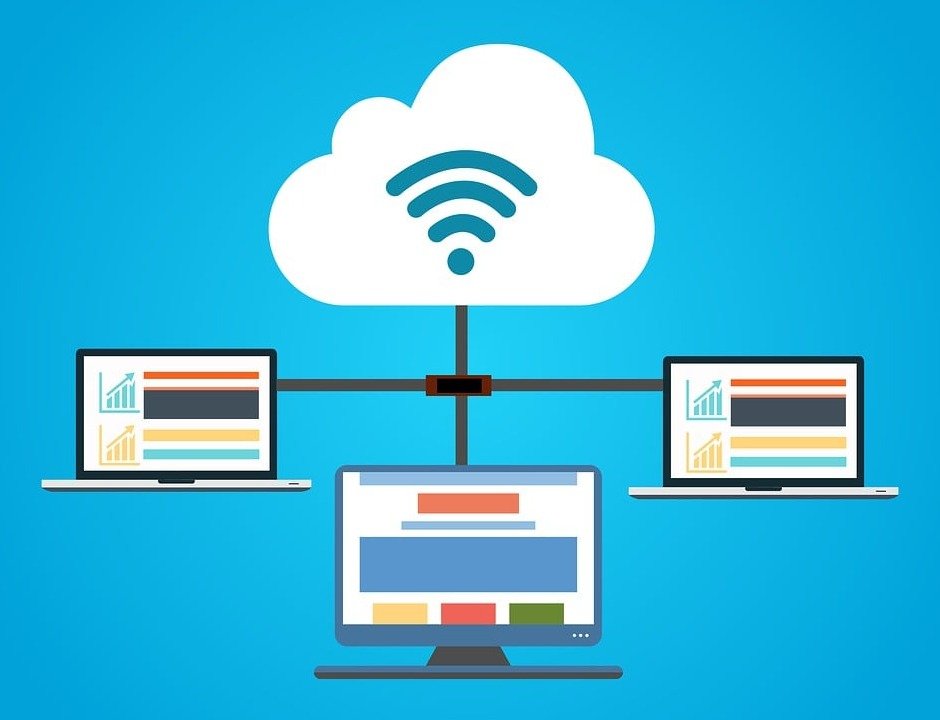
Images are recorded during the nasendoscopy procedure, processed through the Blaise AI algorithm and stored on a protected cloud.
Blaise provides a diagnosis in the form of a report which is logged in the patient's online medical records.
The images and report can also be reviewed remotely via our patient record portal, providing secure access to your protected cloud database.